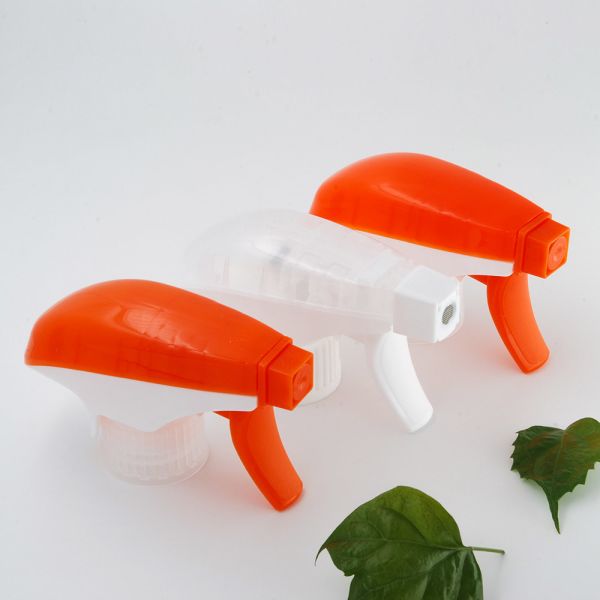
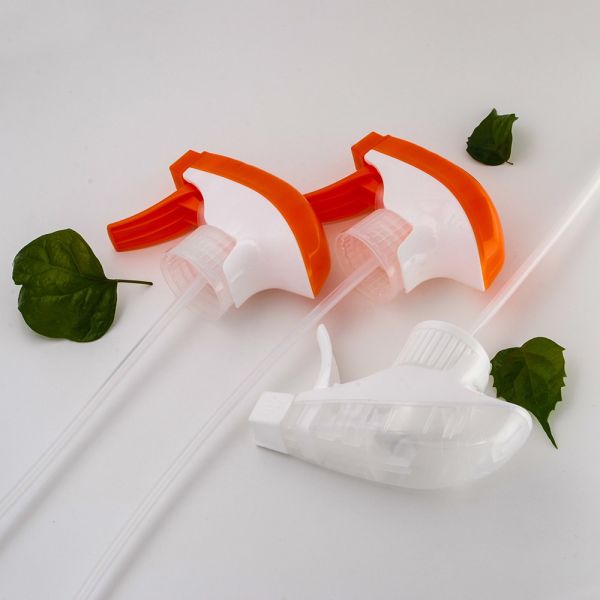
Plastic PP Foam Trigger Sprayer with Air Intake System
Designed for glass cleaning and foam creation applications, this advanced trigger sprayer transforms liquid formulas into rich, stable foam through integrated aeration technology.
How Foaming Dispensers Work: The Science of Foam Creation
Foaming dispensers represent an advanced evolution of standard sprayers, engineered to convert liquid formulas into consistent, stable foam through integrated aeration systems that combine liquid, air, and mechanical action.
Four-Stage Foam Creation Process
1. Liquid Intake (The Foundation)
The process begins with a dip tube extending to the container bottom, drawing liquid formula upward into the pump chamber during trigger actuation. This ensures complete product utilization from first to last use.
2. Integrated Aeration (The Critical Difference)
During pumping, vacuum creation activates a dedicated air intake valve that draws ambient air into the pump mechanism. Liquid and air combine under pressure to create a pre-mixed aerated solution—the essential component differentiating foamers from standard sprayers.
3. Foam Formation (The Transformation Chamber)
The aerated liquid enters a mixing/foaming chamber containing a critical element: a sintered mesh screen or porous filter. As the liquid-air mixture passes through this dense network of microscopic pores, turbulence and pressure create countless uniform bubbles. Mesh material and porosity are precisely engineered to achieve desired foam consistency—from light, airy lather to dense, creamy foam.
4. Foam Dispensing (The Final Delivery)
Fully formed, stable foam expels through the nozzle as a cohesive, sculptable mound that clings to surfaces without drips or runs. Foam texture and stability are determined by formula viscosity, air-to-liquid ratio, and specific foaming chamber and mesh design.
Key Advantages of Foaming Dispensers
- No-Drip, Clingy Application: Foam adheres vertically to surfaces (car panels, skin, hair) without immediate runoff, allowing extended contact time for more effective cleaning or treatment
- Reduced Product Waste: Small liquid amounts generate substantial foam volume, encouraging economical use while providing excellent coverage
- Enhanced User Experience: Rich, tactile foam feels luxurious and is perceived as more effective and premium than liquid or spray formulations
- Improved Efficacy: For cleaners, sanitizers, and personal care products, foam structure and extended surface contact enhance cleaning action and ingredient absorption
Ideal Applications
- Hand Soaps & Sanitizers: Creates rich, luxurious lather
- Facial Cleansers & Shaving Creams: Provides gentle, even application
- Automotive Care: Touchless car wash soaps, wheel cleaners, and trim dressings requiring vertical surface cling
- Household Cleaners: Kitchen and bath cleaners benefiting from vertical surface adhesion
- Hair Care: Leave-in conditioners, styling mousses, and scalp treatments
Engineering Partnership for Optimal Foaming Solutions
Perfect foam requires precise harmony between your formula and dispensing mechanism. Our engineering team specializes in optimizing air-to-liquid ratios, mesh selection, and chamber design to deliver exact foam quality for your product requirements.